
Thousands of business owners want to get featured in Business Insider, but only a few know what it actually takes. If you’re serious about how to get featured on Business Insider, this step-by-step guide gives you the exact process; from first pitch to published feature.
Business Insider reaches over 100 million readers monthly. A single press coverage win on that platform can shift how your entire industry sees you. So your approach must be strategic from day one.
This guide covers pitch crafting, journalist research, follow-up strategy, and real examples. By the end, you’ll know exactly what to do; and what to avoid.
What It Actually Takes to Get Featured in Business Insider
Business Insider is not a press release board. Journalists there are looking for stories, not promotions. Your pitch must offer genuine news value, or it will not get a single response.
What Business Insider Journalists Look For
Business Insider journalists select stories that inform, challenge, or surprise their audience. Generic business updates do not make the cut.
Here’s what journalists actively want:
- Original data or research that reveals a fresh trend
- A timely hook tied to a current news cycle
- An expert unique voice that adds depth to a breaking story
- A human story with clear business impact
Your pitch must answer one question immediately: “Why does this matter right now?” A strong answer to that question is your first foot in the door.
Newsjacking is one of the fastest paths to earned media. When a major business story breaks, journalists need expert voices within hours. If your positioning is clear and your pitch arrives fast, a press mention is very achievable.
Who Business Insider’s Audience Is (And Why It Matters for Your Pitch)
Business Insider’s core readers are professionals aged 25 to 45. They follow markets, careers, startups, and lifestyle trends. They share content that makes them look well-informed.
Before you write your pitch, ask yourself this: “Would a Business Insider reader share this story?” If the honest answer is no, change your angle.
Your story must serve their audience — not yours. That’s the single biggest mindset shift most business owners need before pitching.
How to Craft a Pitch That Gets a Business Insider Feature
The pitch email is your first impression. Most pitches fail in the subject line before a journalist reads a single word. So your structure must be sharp from the top.
The Structure of a Winning Pitch
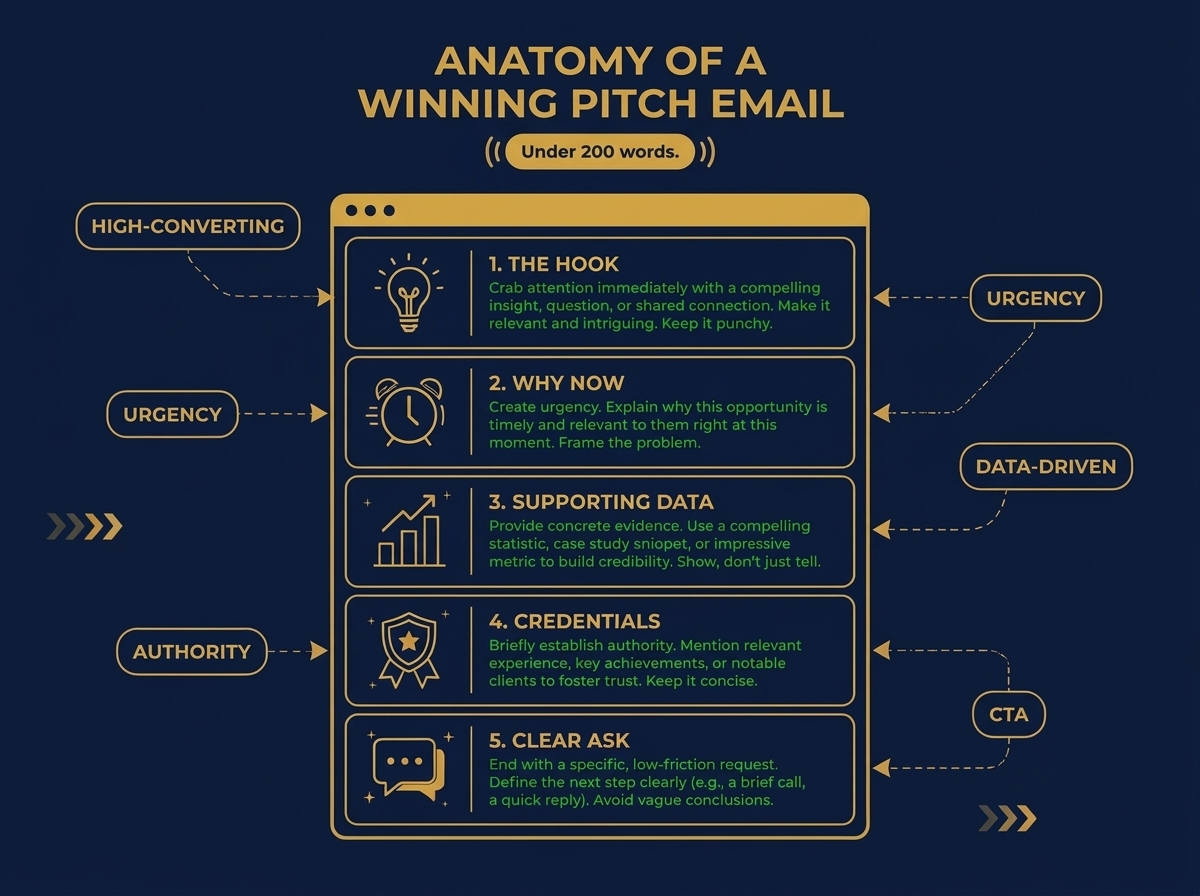
A strong pitch email follows a clear, proven structure:
- Hook (1–2 sentences) — Lead with the story angle, not your bio
- Why now (1–2 sentences) — Tie the pitch to a current event or trend
- Supporting data — Include one sharp, credible data point
- Your credentials — Two lines maximum
- Clear ask — Specify what you want: an interview, a byline, or a quote
Keep your entire pitch under 200 words. Journalists are busy. A long pitch signals that you don’t understand how their workflow operates.
Psychological Triggers That Make Journalists Open Emails
Your subject line must do two things. First, it must create curiosity. Second, it must signal relevance.
Here are subject lines that work:
- “New data: [Industry] is changing — here’s what it means”
- “Exclusive: [Your company] just did something your readers should know”
- “Quick story idea — [Journalist’s first name]”
Personalization is non-negotiable. Journalists can spot a mass pitch email within two seconds. Use their name. Reference a specific article they wrote recently. Show that you are pitching them, not everyone on your media list.
How to Use Data and Original Research in Your Pitch
Original data turns you from a subject into a source. When you say “our survey of 500 business owners found that…”, you become the story; not just someone in it.
Here’s what counts as strong data for journalist outreach:
- An original survey with at least 100 respondents
- Internal company data that reveals a clear business trend
- A third-party report you can apply to a timely news angle
Avoid data older than 12 months. And never cite Wikipedia. Journalists will check your sources. Use government reports, credible industry studies, or your own first-party research.
Pitch Email Template (Swipeable Example)
Subject: New data: 67% of small businesses skip earned media, here’s why that’s changing
Hi [First Name],
I recently read your piece on [specific article] and thought you might want a related angle.
Our research team surveyed 500 US business owners in Q3 2026. We found that 67% have never tried journalist outreach; even though press coverage is their top listed growth priority.
I’m [Your Name], [Your Role] at [Your Company]. We’ve supported over 200 businesses in building PR strategy and earning media placements in major outlets.
I can offer you first access to our full dataset. Or, if it fits your editorial calendar, I can write a contributed article on this topic.
Would either work for you?
[Your Name]
[Contact Info]
This template works because it leads with value. It does not open with “I am reaching out because.” The journalist’s self-interest comes first — and that’s what gets replies.
How to Find and Approach the Right Business Insider Journalist
Sending a pitch to the wrong journalist wastes your time and theirs. Research the right contact before you write a single word.
How to Research Journalists by Beat
Every journalist at Business Insider has a beat, a specific topic area they own. Some cover fintech. Others focus on real estate, health, or career advice.
Here’s how to find the right person:
- Browse Business Insider’s author pages and filter by topic
- Search LinkedIn for “Business Insider journalist” + your industry keyword
- Use Muck Rack or Cision to access detailed journalist beat profiles
- Monitor Twitter (X) for journalists actively discussing your topic
A tech pitch sent to a lifestyle journalist goes straight to the trash. Beat matching is not optional, it’s the foundation of effective media relations.
How to Engage on LinkedIn and Twitter Before You Pitch
Cold pitches work occasionally. Warm pitches work consistently. Build visibility before you send your media pitch.
Here’s a simple 2-week warm-up:
- Week 1: Follow the journalist on LinkedIn and Twitter
- Week 1: Leave 2–3 thoughtful comments on their recent posts
- Week 2: Share one of their articles with a genuine, specific observation
- Week 2: Send your tailored pitch to them
When your name is already familiar, your pitch email gets opened first. That’s the core logic behind media relations; relationship before transaction, every time.
Attending Events Where Business Insider Journalists Appear
Business Insider journalists appear at major business and technology conferences. TechCrunch Disrupt, South by Southwest, and the World Economic Forum regularly feature their editorial team.
Meeting a journalist in person changes your pitch from cold email to familiar face. Always carry a one-page media kit at these events. Keep it simple: your name, your company, your most relevant press mention, and one sharp story idea.
The Follow-Up Process: How to Stay on a Journalist’s Radar
Most pitches go unanswered the first time. That’s normal. It usually means the journalist is busy, not that the story is bad.
When and How to Follow Up
Wait five business days before following up. Send one follow-up, not a sequence.
Your follow-up should:
- Refer to your original pitch in one sentence
- Add one new piece of information; a fresh data point or a tighter angle
- End with an easy out: “No problem if the timing isn’t right”
Do not follow up more than twice. After two emails, move on. You are building media relations, not running a cold sales campaign.
How to Handle a Rejection Without Burning the Relationship
Rejection is not personal. Journalists turn down over 90% of pitches for editorial reasons; not because your story has no merit.
When you receive a “not for us” reply:
- Respond in one line: “Thanks for letting me know, I’ll keep you in mind for future stories.”
- Do not ask why. Do not push for a second chance.
- Note in your media database that this journalist replied.
A journalist who replied with a no is more valuable than one who never replied at all. That response is the beginning of a real media relations relationship.
Tailoring Your Story to Business Insider’s Specific Sections
Business Insider has distinct editorial sections with different standards and audiences. Your pitch must match the right one.
Finance & Business
This section covers money, markets, and business decisions. Data-heavy pitches perform best here.
Strong angles for this section:
- Revenue or market growth data with meaningful context
- Founder decisions that produced counterintuitive results
- Industry trends that challenge conventional wisdom
Technology
The technology section looks for stories about products, platforms, and the people building them. Thought leadership on AI, fintech, and enterprise software performs particularly well here.
For tech pitches:
- Lead with what your product does differently
- Support your claim with user adoption data or third-party validation
- Tie your story to a broader technology trend
Lifestyle
Business Insider’s Lifestyle section covers careers, personal finance, and wellness. The editorial angle is “how this affects real people.”
For lifestyle pitches:
- Use personal stories as proof points
- Connect business decisions to everyday experience
- Keep the tone approachable and direct
Can You Get Featured in Business Insider Without a PR Agency?
The short answer to this question is Yes, and the answer depends entirely on your time, your story, and how much relationship-building you can commit to.
DIY Approach: What’s Possible and What’s Not
You can get featured on Business Insider without an agency. Many founders and executives do it. What you need:
- A strong, timely story
- Clear writing skills for your pitch email
- Time to research journalists and warm up relationships
- A media kit with your bio, credentials, and company data
What is harder without PR support:
- Building press lists at scale
- Getting responses from senior editors
- Understanding each journalist’s current story pipeline
The DIY approach works best when you have one strong story and are prepared to do the relationship work yourself.
When a PR Agency Gives You a Real Advantage
A reputable PR agency like 9-Figure Media gives you speed and pre-existing media relations. If you need to get featured in Business Insider within a tight window, before a product launch, a funding announcement, or a major event; existing journalist relationships cut weeks off your timeline.
An experienced PR strategy partner understands what each journalist is actively pursuing before you pitch. That intelligence alone changes your conversion rate significantly.
For long-term brand authority built on consistent press coverage, the agency model compounds your results over time.
How Long Does It Take to Get Featured in Business Insider?
The honest answer to this question: anywhere from two weeks to six months.
Here’s what affects the timeline:
- Story timing: A pitch tied to breaking news can earn a press mention within days
- Relationship history: Journalists who already know your name respond faster
- Pitch quality: A sharp pitch with data moves faster than a generic one
- Volume: Business Insider journalists receive hundreds of pitches weekly
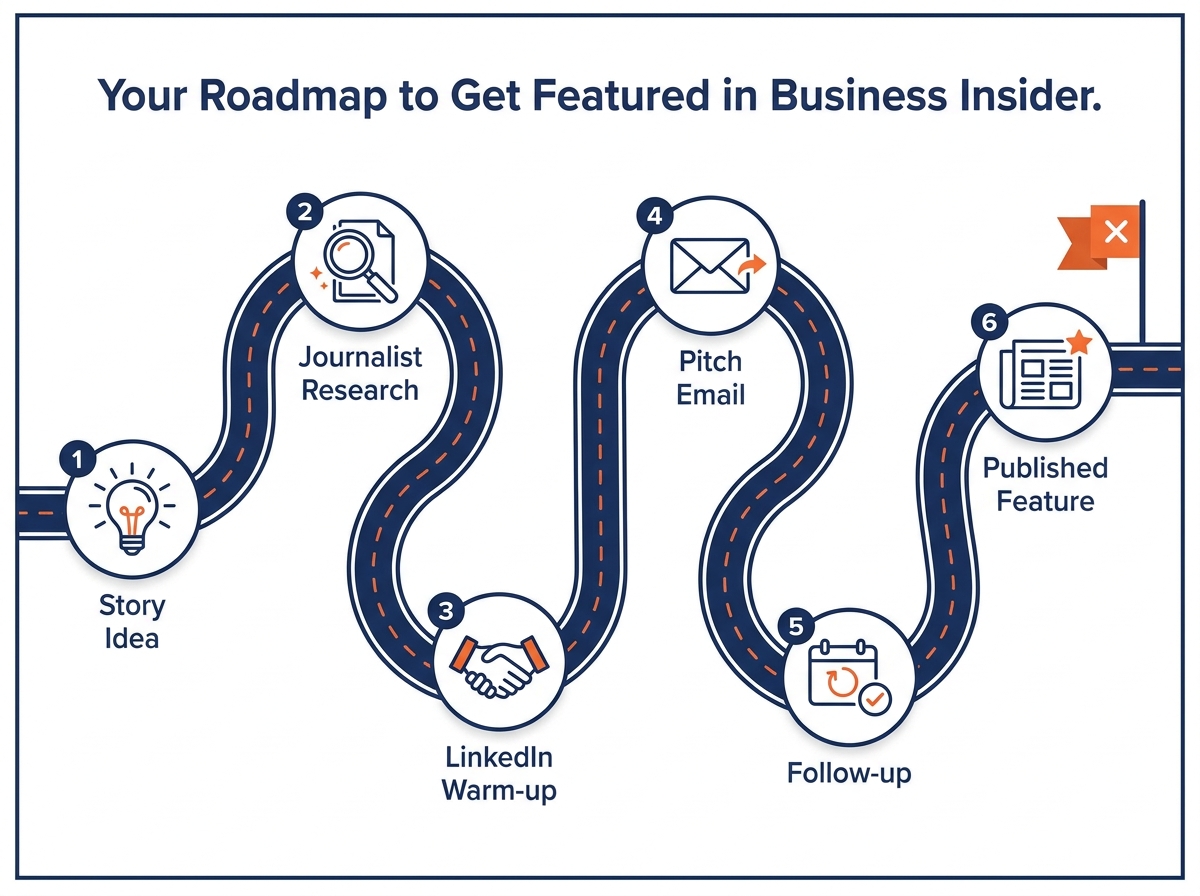
For most businesses pitching without prior media relations, expect two to three months. Use that time productively. Warm up relationships, sharpen your pitch, and build original data to support your story.
Real Examples: Businesses That Got Featured and What They Did Right
Here are some examples of businesses that got featured in Business Insider and what they did right to secure that feature. We explored both Tech Startup and Lifestyle Brand.
Case Study 1: Tech Startup
A B2B SaaS startup in the HR technology space earned a Business Insider feature by leading with original survey data. The founder surveyed 300 HR managers about remote work adaptation challenges. That data became a timely hook during the return-to-office debate.
What they did right:
- Original research gave the journalist a news peg with fresh data
- The pitch was under 150 words with a sharp subject line
- The founder had engaged with the journalist on LinkedIn for three weeks before pitching
- They offered an exclusive first look at the full dataset
Result: A 1,200-word feature with a domain authority backlink to their company website. Referral traffic increased 40% within the first month.
Case Study 2: Lifestyle Brand
A wellness brand earned a Business Insider Lifestyle feature through a contributed article / byline strategy. The founder pitched a first-person piece about burnout and business recovery, backed by third-party health data.
What they did right:
- The personal story made the pitch credible and human
- The contributed article format reduced editorial work for the journalist
- They submitted through the Business Insider contributor program directly
Result: The byline generated over 4,000 referral visits in the first week. It also attracted two podcast invitations from readers in the same audience segment.
Frequently Asked Questions About Getting Featured in Business Insider
Securing press coverage in Business Insider elevates brand authority, expands reach, and transforms industry perception. But getting featured takes far more than distribution lists.
This section breaks down the pitch mechanics, editorial criteria, and strategic moves that turn media outreach into published stories.
Does Business Insider accept press releases?
Not as a standard. Journalists may use press releases as background research. But a press release alone will not earn a feature. You need a pitch email built around a story angle — not a company announcement.
Is HARO / Connectively still useful for Business Insider coverage?
Yes. HARO (now Connectively) sends daily journalist query emails. Business Insider journalists use it for expert quotes and sources. Set up keyword alerts for your industry. Respond within two hours of each relevant query. Speed matters significantly here.
Do you need a media kit to pitch Business Insider?
You do not need one to pitch. But having one ready helps when a journalist asks for more information. Your media kit should include your bio, high-resolution headshots, previous press mentions, and key company statistics.
Can a small business get featured in Business Insider?
Yes. Business Insider has featured solopreneurs and early-stage startups. The story angle matters far more than company size. If your story serves their target audience, it will get considered.
What is the difference between a press mention and a full feature?
A press mention is a quote or reference within a larger story. A feature is a full article focused on you or your company. Both build brand authority. Features carry more weight for credibility and domain authority backlink value.
Is newsjacking a good strategy for Business Insider?
Newsjacking is one of the fastest paths to a press mention. When a major business story breaks, email two to three relevant journalists with your expert angle within four hours. The window is short, but it works.
Next Step: Is Your Story Ready for Business Insider?
Before you send your first pitch email, run through this quick check:
- Does your story offer something new; original data, a unique angle, or a timely hook?
- Have you identified the right journalist by beat?
- Is your pitch under 200 words with a clear, specific ask?
- Do you have a media kit ready if a journalist asks for it?
- Have you spent at least two weeks building rapport before pitching?
If you answered yes to at least three of these, you are ready to pitch.
If you want to get featured in Business Insider without spending months on trial and error, working with a specialist in earned media and PR strategy cuts your timeline significantly. The difference is not just about access — it’s about knowing what each journalist wants before you send a single word.
Your story has real value. The question is whether you are presenting it in a way that makes a journalist want to tell it.