
In 2014, the ALS Ice Bucket Challenge raised $115 million in eight weeks. It was not paid media, nor was it influencer marketing in any traditional sense. It was a perfectly constructed viral PR campaign that used human psychology to spread itself.
People watched it.
Most brands want virality and few understand what actually causes it. The ones who do understand it produce viral PR campaigns that change the trajectory of their brand. The ones who do not waste budget on expensive content that nobody shares.
Why Viral PR Campaigns Spread
Virality is not random, it follows predictable psychological patterns. Professor Jonah Berger, marketing researcher at Wharton, spent years studying why content spreads.
His research produced the STEPPS framework: Social Currency, Triggers, Emotion, Public, Practical Value, and Stories. Every successful viral PR campaign activates at least two or three of these elements.
Social currency is the most powerful driver. People share things that make them look good. They share content that makes them appear informed, witty, or connected to something important.
When a viral campaign gives people a reason to share because of how it reflects on them, the sharing becomes automatic.
Emotion is equally critical. According to research published in the Journal of Marketing Research, high-arousal emotions, awe, anger, amusement, drive sharing far more effectively than low-arousal emotions like sadness or contentment.
The most effective viral campaigns produce a strong emotional response that people want to pass on. Not because they were told to, but because they felt compelled to.
The STEPPS Framework
Understanding the psychology is one thing. but applying it to build a specific viral PR campaign requires a structured approach. The STEPPS framework gives you a checklist for designing content that spreads.

Social Currency and Practical Value in Viral PR
Social currency is about exclusivity and identity. When your viral PR launch gives people inside information, early access, or a strong position to hold in a conversation, they share it to signal their status.
Spotify Wrapped is one of the best-designed applications of social currency in recent PR history. Every year, Spotify releases personalised music data summaries.
Users share them because their data tells a story about who they are. The campaign generates hundreds of millions of shares with zero paid distribution.
Content that genuinely helps people gets shared because sharing it makes the sharer look generous and knowledgeable. A viral PR strategy built around an original research report, a genuinely useful tool, or a surprising industry insight has inherent practical value.
Additionally, it positions your brand as a trusted source, which is ultimately what PR is designed to achieve.
For startups, practical value is often the most accessible social currency. You may not have Spotify’s brand recognition. But you can publish original data about your market that no one else has.
That data, packaged correctly, becomes the foundation of a viral PR campaign that earns media coverage and social sharing simultaneously.
The Emotional Architecture of Viral Campaigns
Designing a viral PR campaign for emotional impact requires understanding which emotions drive action. Not all strong emotions produce sharing behavior. The architecture matters.
Awe is the most shareable emotion. When people encounter something that challenges their understanding of what is possible, they share immediately.
The SpaceX rocket landing in 2015 was not a planned viral PR campaign, but it became one because the footage produced global awe. Millions shared it because they needed to show others that this had happened.
Amusement drives sharing across all demographics.
Dove’s “Real Beauty Sketches” campaign used emotional contrast, showing women how differently they saw themselves versus how strangers saw them, to produce a viral campaign that generated over 180 million views in its first month.
It worked because it made people feel something specific and then gave them a clear way to act on that feeling: share it.
Outrage also spreads rapidly. However, brands that build viral PR campaigns on manufactured controversy face significant risk. Genuine outrage about a real injustice, aligned with your brand values, can produce powerful results.
Manufactured outrage almost always backfires. Know the difference before you build your strategy around it.
Building PR Campaigns Around Triggers and Storytelling
Triggers are the environmental cues that prompt people to think about your brand. A viral PR campaign built around strong triggers does not just generate one wave of sharing. It generates repeated sharing every time the trigger occurs in daily life.
The classic example is KitKat and coffee. In the early 2000s, KitKat ran campaigns in Japan that deliberately linked their product to coffee breaks. The trigger – the act of taking a break, became a mental reminder of KitKat.
Sales increased by 257% in Japan over the following years. This is trigger-based viral PR campaign thinking applied to product marketing.
Story Structure: How Narrative Drives PR Campaigns
Stories are the most ancient technology for spreading ideas. A PR campaign built on a strong narrative structure spreads because humans are biologically wired to share stories. We have been doing it around fires for 300,000 years.
The most shareable stories follow a simple structure. A relatable character faces a specific problem. They struggle and something changes. They achieve a meaningful outcome.
The emotional arc.. tension, then resolution, is what triggers sharing. Without the tension, there is no story. Without the story, your PR campaign is just content.
Airbnb’s “Belong Anywhere” campaign used this structure brilliantly. It told real stories of hosts and guests forming unexpected connections. The tension was alienation, the feeling of being a stranger in a foreign place.
The resolution was belonging. The campaign became one of the most talked-about viral PR campaigns of the decade because it told a story that resonated with a universal human experience.
Furthermore, the story must be true. Audiences in 2026 are extraordinarily good at detecting inauthenticity. A viral PR campaign built on a fabricated or exaggerated story will be exposed rapidly on social media.
Find the genuine story in your brand. Tell it honestly. That is the story that spreads.
The Mechanics of Launching a Viral PR Campaign
Psychology drives sharing. But mechanics determine whether a PR campaign actually gets seen by enough people to reach critical mass. The best-designed campaign in the world fails if nobody sees the first wave of content.
Five mechanical elements determine whether a viral PR campaign achieves lift-off:
- Seeding: Identifying the 50 to 100 highly connected individuals who will share your campaign first
- Platform selection: Choosing the one or two platforms where your audience is most active and most likely to share
- Timing: Launching when your audience is most likely to be online and receptive
- Friction removal: Making sharing so easy that there is no reason not to do it
- Hook clarity: Ensuring the shareable element of the campaign is immediately obvious in the first three seconds
Additionally, earned media dramatically amplifies viral PR campaigns.
When a top-tier publication covers your campaign, it provides social proof that tells audiences this is worth their attention. This is where 9-Figure Media creates compounding value.
Our guaranteed placements in Forbes, Business Insider, and Entrepreneur give PR campaigns the authoritative signal that accelerates organic sharing.
The Role of Participation Mechanics in PR Campaign Success
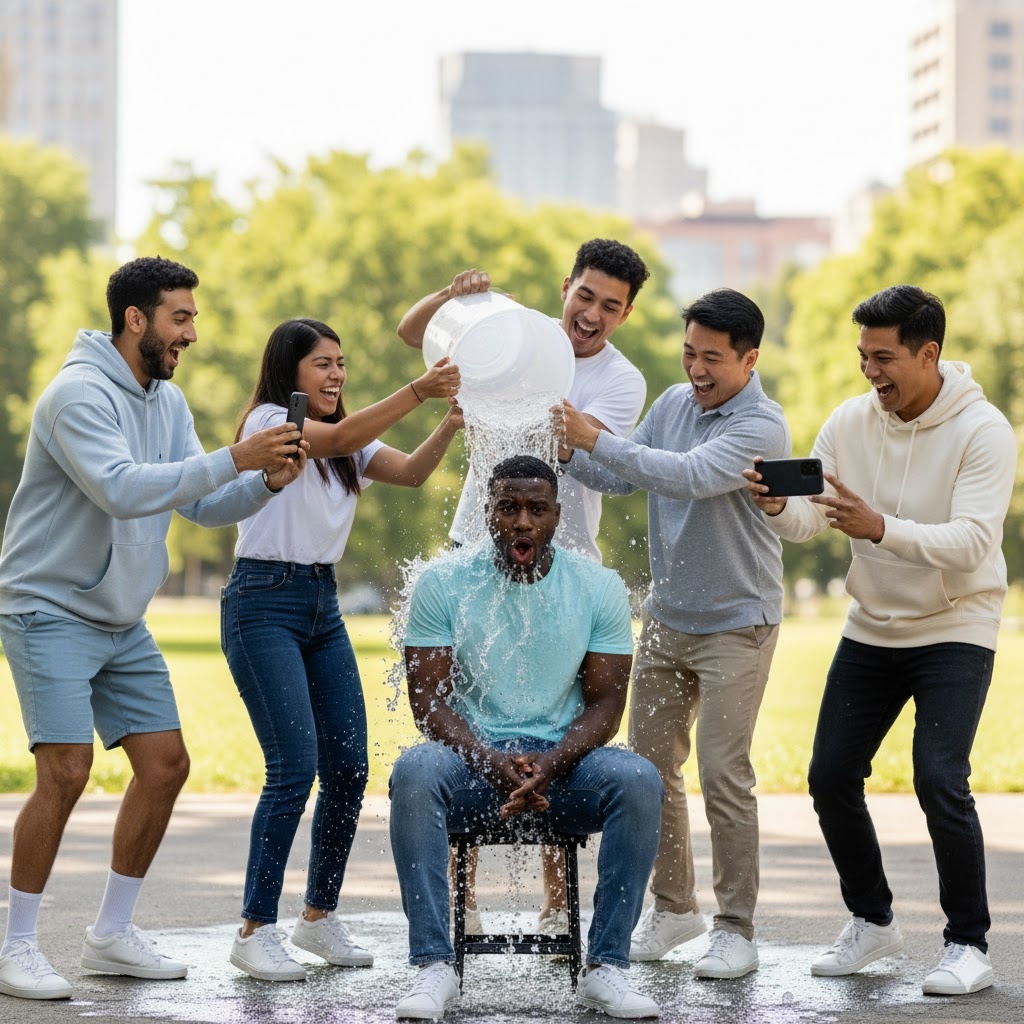
Most brands misunderstand participation. They assume that if content is emotional or clever enough, people will automatically share it. But the most successful viral PR campaigns do not rely on passive sharing, they engineer participation.
They give audiences something to do, not just something to watch. This is the structural backbone behind every campaign that spreads beyond its initial audience.
Participation mechanics work because they shift people from spectators to contributors. The Ice Bucket Challenge was not viral because people liked watching it. It was viral because people were challenged to participate publicly, nominate others, and perpetuate the chain.
This is a psychological design, not an accident.
A powerful participation mechanic includes three elements: simplicity, social visibility, and personal expression. Simplicity ensures participation requires little effort, something a person can do immediately without preparation.
Social visibility ensures participants receive recognition for their involvement, triggering the intrinsic reward that reinforces sharing. And personal expression allows people to adapt the activity to their identity, increasing the likelihood of unique, creative interpretations that further the campaign.
For brands, the key insight is participation must be easier than non-participation. If the audience has to think, prepare, or justify the action, the viral loop breaks. The mechanic must be so seamless that people participate impulsively.
This is why campaigns built on user-generated content often go viral. They allow audiences to shape the narrative and create a sense of ownership.
They transform the campaign into a co-created moment where the brand is the spark, but the audience drives the wave. When participation is designed correctly, sharing becomes inevitable.
How Brand Alignment Determines PR Campaign Sustainability
A viral PR campaign can bring millions of views, thousands of shares, and global attention, but none of that matters if the campaign is misaligned with the brand’s identity or long-term strategy.
Sustainable virality is different from momentary visibility. It requires emotional resonance and strategic relevance.
Many startups make the mistake of chasing attention for attention’s sake. They create outrageous stunts, shocking visuals, or controversial statements with the hope that the internet will amplify them.
While these tactics may generate short-term spikes, they rarely convert into lasting brand equity. Worse, they can attract the wrong audience, one that has no connection to the brand’s true value.
Brand alignment ensures that a viral PR campaign does not just spread, but spreads the right story. A viral idea must reinforce the brand’s core positioning.
It must highlight what the brand stands for. It must deepen audience understanding rather than distract from it.
Consider Patagonia’s viral campaigns around environmental activism. The attention they generate is huge, but more importantly, it reinforces their brand promise. Every share strengthens the brand’s identity.
Startups need to build viral concepts the same way. Ask three questions:
- Does this campaign express something true about the brand?
- Will the audience who shares this content also be the audience who buys from us?
- Does the emotional response we trigger support our long-term narrative?
When the answers are yes, virality becomes not just a moment, but a strategic asset. A brand-aligned viral campaign continues generating relevance long after the initial spike ends.
AI, Micro-Communities, and Hyper-Targeted Story Engines
Viral PR in 2026 is entering a new era. The days of generic mass-sharing campaigns are over. The next generation of viral PR campaigns will be driven by precision: hyper-targeted audiences, AI-powered storytelling, and micro-community activation.
AI is transforming campaign ideation. Tools now analyze emotional response patterns, predict shareability scores, and identify narrative angles with the highest viral potential. Brands can test headline variations, emotional frames, and visual concepts before launching.
This reduces risk and dramatically increases hit rates. Viral PR campaigns will increasingly be engineered through predictive modeling.
Micro-communities are becoming equally important. Attention has fractured across thousands of niche groups, subreddits, Discord servers, professional Slack channels, private newsletters, and closed creator communities.
Virality now often begins in micro-spaces before reaching mainstream social platforms. A campaign seeded strategically inside relevant micro-communities can generate exponential early momentum.
Additionally, the rise of the “story engine” model, continuous storytelling over one-time stunts, will define the future of viral PR. Instead of launching a single campaign, brands will build modular content narratives that evolve in real time, reacting to cultural moments and audience participation.
The result is “rolling virality”: multiple waves of attention that compound over months rather than days.
Ultimately, the future belongs to brands that understand two truths: virality is no longer accidental, and audiences want relevance more than spectacle.
The campaigns that win will combine psychology, precision targeting, AI insights, and authentic storytelling into cohesive viral ecosystems. The brands that master this shift will dominate their category.
Measuring Viral PR Campaign Performance Beyond Shares
Shares are a vanity metric if they are not connected to business outcomes. A successful PR campaign is measured by what happens after people share it.
The metrics that matter most are:
- Share-to-conversion rate: What percentage of people who share the campaign take a desired action?
- Earned media coverage: How many top-tier publications cover the campaign organically?
- Brand search volume increase: Does organic search for your brand name increase following the campaign?
- Sentiment score: Is the conversation about your campaign positive, and does it improve overall brand sentiment?
Furthermore, measure the long tail. The best viral PR campaigns generate sharing and media coverage for weeks and months after launch. A campaign that peaks on day one and disappears has limited PR value.
A campaign that earns ongoing coverage, references, and social sharing builds cumulative brand authority. That is the difference between a moment and a movement.
Viral PR Campaigns Are Built, Not Born
Virality is not luck. It is architecture. The ALS Ice Bucket Challenge did not go viral by accident. It was built around social currency, public participation, emotional resonance, and a story worth telling. Every successful PR campaign is built the same way.
The core principles to remember are:
- High-arousal emotions-awe, amusement, inspiration, drive sharing far more than low-arousal ones
- Social currency, triggers, and practical value are the most accessible psychological levers for brands
- Story structure with genuine tension and resolution is the engine that makes PR campaigns spread
- Seeding, platform selection, and earned media coverage determine whether a campaign achieves critical mass
- 9-Figure Media guaranteed placements provide the credibility anchor that accelerates every viral PR campaign
Finally, design your next PR campaign around a true story. Find the emotion that your audience already feels about the problem you solve. Give them a compelling reason to share. Then make sharing as easy as possible. The psychology will do the rest.

Frequently Asked Questions
What makes a PR campaign go viral?
Viral PR campaigns spread because they activate specific psychological drivers: social currency, high-arousal emotions, strong story structure, practical value, and triggers. The most effective campaigns combine at least three of these elements and give audiences a frictionless way to share.
Can small brands create viral PR campaigns?
Yes. Original research, genuine human stories, and strongly opinionated positions on industry issues all create viral potential regardless of brand size. In fact, some of the most widely shared PR campaigns came from startup brands with no existing media following.
Most viral PR campaigns show early signals within the first 24–72 hours. However, the speed depends on seeding strategy, platform choice, and emotional triggers.
Do viral PR campaigns require a large budget?
No. Budget helps with production value and amplification, but psychology, narrative structure, and participation mechanics drive virality, not spending. Some of the most famous viral PR campaigns cost almost nothing to produce.
How long does it take for a viral PR campaign to gain traction?
Most viral PR campaigns show early signals within the first 24–72 hours. However, the speed depends on seeding strategy, platform choice, and emotional triggers. A well-seeded campaign can hit critical mass within a day, while others build through multiple waves over several weeks.