
Introduction
How to Get on Forbes 30 Under 30 starts with understanding why this list matters. Forbes 30 Under 30 remains the gold standard for young visionaries worldwide.
The list opens doors that stay closed for most entrepreneurs. You gain instant credibility with investors who write bigger checks. Your business attracts top talent that wants to work with winners.
Media outlets suddenly want to interview you. Partnership opportunities flood your inbox. Your personal brand skyrockets overnight.
The Forbes 30 Under 30 list has launched billion-dollar companies. Past honorees include names you know today. They started where you are now.
At 9-Figure Media, we’ve helped clients secure guaranteed Forbes placements. One tech founder went from unknown to funded within 90 days. Another client closed a Series A after their feature went live.
The path exists. You just need the right strategy.
How to Get on Forbes 30 Under 30 – The Ultimate Guide
Getting featured on Forbes 30 Under 30 requires more than great ideas. You need a measurable impact that judges can verify. Your story must stand out among thousands of applications.
The selection process evaluates your achievements against strict benchmarks. Judges look for proof of success. They want numbers, not promises.
Your application competes with founders raising millions. You’re up against social entrepreneurs changing communities. Scientists making breakthroughs fill the pool, too.
But self-made success stories win every year. You don’t need famous connections. You need a strategy that positions your achievements correctly.
This guide breaks down exactly what works. Each step comes from analyzing past winners. We’ve identified the patterns that get you noticed.
Forbes 30 Under 30 Criteria Explained
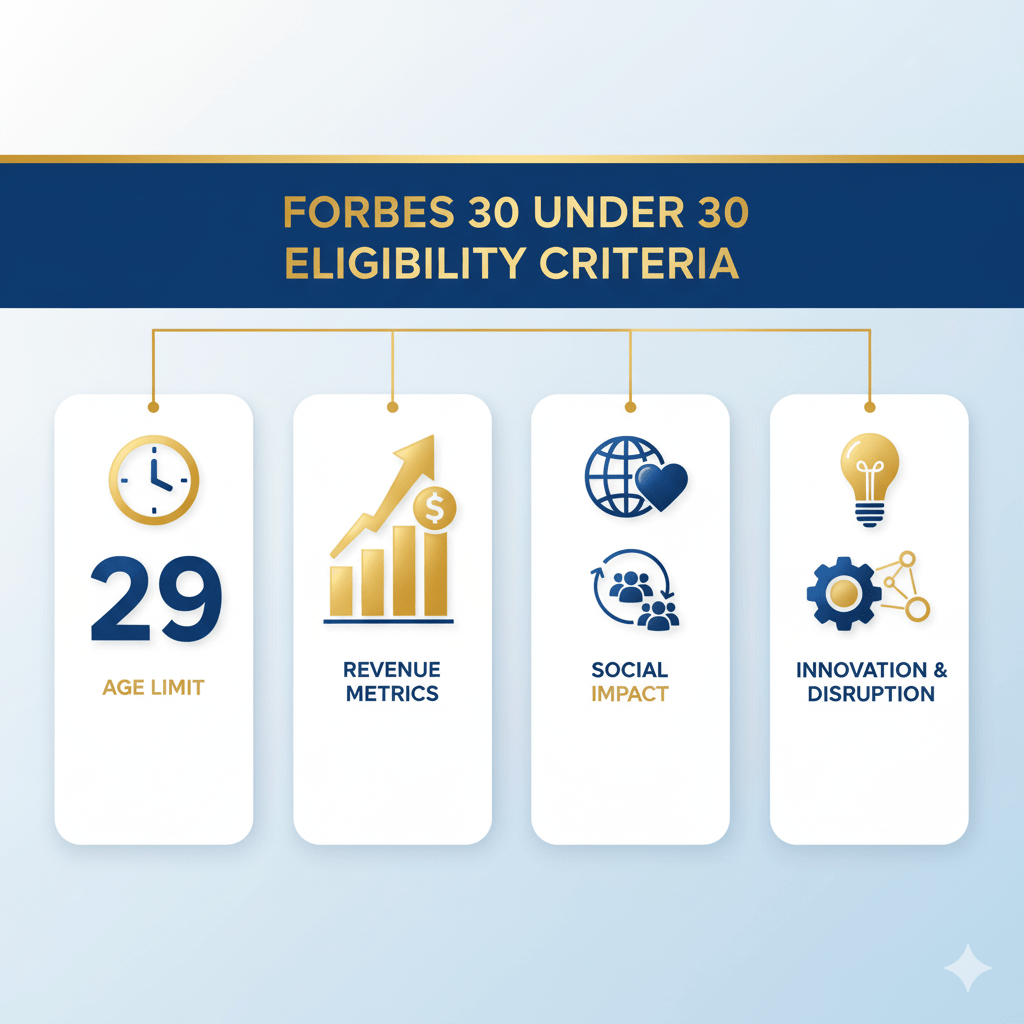
Forbes Under 30 Criteria starts with the Forbes 30 Under 30 Age Limit. You must be 29 years old or younger on December 31st. No exceptions exist for this rule.
Forbes 30 Under 30 Eligibility extends beyond age. Your business must show real traction. Revenue matters, but it’s not everything.
What Does Forbes Look for in 30 Under 30? They prioritize three core elements. First, you need measurable business growth or professional achievement. Second, your work must create a meaningful impact.
Third, you must demonstrate leadership in your field. A founding role carries weight. Leading a major initiative at an established company works too.
Forbes 30 Under 30 Social Impact plays a bigger role each year. The judges favor entrepreneurs solving real problems. Climate tech, healthcare access, and education get attention.
Forbes 30 Under 30 Revenue Requirements aren’t officially published. Most winners show $500K to $5M in annual revenue. Early-stage founders can qualify with strong funding rounds.
Metrics for Forbes 30 Under 30 vary by category. Tech founders need user growth and engagement numbers. Social entrepreneurs need lives impacted or communities served.
Scientists need publications and research citations. Artists need audience size and cultural influence. Know which metrics matter for your category.
Who Nominates Forbes 30 Under 30?
Who Nominates Forbes 30 Under 30 surprises most people. You can nominate yourself. Forbes 30 Under 30 Self-Nomination accounts for many winners.
Forbes 30 Under 30 Judges include industry leaders and past honorees. They review applications in their areas of expertise. A venture capitalist judges the finance category.
Networking with Forbes 30 Under 30 Alumni gives you insider knowledge. Alumni understand what judges want to see. They can provide reference letters that carry weight.
How to Be Nominated for Forbes 30 Under 30 offers multiple paths. Self-nomination through the online portal works well. Someone else can nominate you, too.
Third-party nominations come from mentors, investors, or industry leaders. These carry extra credibility. The nominator’s reputation matters.
Past Forbes 30 Under 30 winners can nominate candidates. Their endorsement signals you’re part of their caliber. Alumni nominations get serious consideration.
The nomination source doesn’t guarantee selection. Your achievements and story matter most. A compelling self-nomination beats a weak third-party nomination.
Related: Get Featured on Forbes in 2025: Expert Tips & Guaranteed Results
Forbes 30 Under 30 Nomination Period & Deadlines
Forbes 30 Under 30 Nomination Period opens each summer. Applications typically open in July or August. The deadline usually falls in October or November.
The Forbes 30 Under 30 Application stays open for about three months. You need time to gather materials. Don’t wait until the last week.
The list gets announced in December or January. Winners get notified privately first. Public announcement follows within days.
Start preparing six months before the deadline. You need time to secure recommendations. Your materials require multiple revisions.
Track your metrics throughout the year. Document your achievements as they happen. Scrambling for data at deadline time hurts your application.
Plan your PR strategy before applying. Media features from credible outlets strengthen your case. A strong online presence matters to judges.
Set calendar reminders for nomination opening dates. Follow Forbes’ official channels for announcements. Missing the deadline means waiting another year.
10 Proven Steps to Get on Forbes 30 Under 30
These ten steps form your roadmap to Forbes 30 Under 30. Each builds on the previous one. Skip none of them.
Master these strategies before the Forbes 30 Under 30 Nomination Period opens. Your preparation determines your results. Start implementing these steps now.
The winners all follow similar patterns. They build real businesses first. They generate authentic media coverage second.
Your story must be ready before you apply. The application just packages what you’ve already built. Let’s break down each step.
How to Get on Forbes 30 Under 30 by Building a High-Growth Business
How to Get on Forbes 30 Under 30 starts with business fundamentals. Your company needs real traction. Judges verify every claim you make.
Revenue benchmarks vary by industry and stage. Early-stage tech startups should show $500K to $2M. More established businesses need $5M plus in revenue.
User growth tells a compelling story. If you serve 100K active users, judges notice. A million users put you in contention.
Funding rounds signal investor confidence. A seed round of $1M shows validation. Series A funding of $5M plus makes judges pay attention.
Profitability matters less than growth trajectory. Judges want to see month-over-month increases. Your growth rate needs to be 20 percent or higher.
Customer acquisition costs and lifetime value prove business health. Low CAC with high LTV shows sustainable business. Track these metrics religiously.
Team size indicates scale. A team of 10 to 50 people shows you’re building something real. Solo founders face harder scrutiny.
Your product must solve a real problem. Forbes judges favor businesses with clear value propositions. Market need must be obvious.
How to Get on Forbes 30 Under 30 Through Strategic PR
How to get on the Forbes 30 Under 30 requires media visibility before you apply. PR for Forbes 30 Under 30 isn’t optional. It’s required.
At 9-Figure Media, we’ve cracked the code on media placements. Our clients’ land features in publications that judges actually read. We know which outlets matter most.
Start with industry-specific publications. If you’re in tech, target TechCrunch and VentureBeat. Healthcare founders need coverage in MedTech outlets.
Tier-two business publications build your profile. Inc., Fast Company, and Entrepreneur all count. These features prove you’re newsworthy.
Podcast appearances expand your reach. Find shows with 10K plus listeners in your industry. Judges Google your name during review.
Speaking engagements at conferences demonstrate thought leadership. Even virtual panels help. Record and share these appearances.
Your PR strategy needs to start six months before applying. One feature isn’t enough. You need a pattern of coverage.
We help clients craft pitches that journalists can’t ignore. Our proven framework has secured thousands of placements. The right story angle makes all the difference.
Media features must highlight your achievements. Generic interviews don’t help. Each piece should reinforce your Forbes 30 Under 30 narrative.
How to Get Nominated for Forbes 30 Under 30
How to Get Nominated for Forbes 30 Under 30 offers two main paths. Forbes 30 Under 30 Self-Nomination works better than you think. Third-party nominations help too.
Self-nomination requires confidence in your achievements. You control the narrative completely. You choose which metrics to highlight.
Write your application like you’re profiling someone else. Remove emotion and stick to facts. Let your achievements speak for themselves.
Third-party nominations add credibility. An investor’s endorsement carries weight. An industry leader’s recommendation gets attention.
Alumni endorsements work best. Past Forbes 30 Under 30 winners understand the bar. Their support signals that you meet that standard.
Request nominations from people who know your work deeply. They need specific examples of your impact. Generic praise doesn’t help.
Provide your nominators with a fact sheet. Include your key achievements and metrics. Make it easy for them to write strong recommendations.
Self-nomination combined with strong letters works best. You tell your story completely. References validate your claims.
Don’t rely solely on others to nominate you. You might miss the deadline waiting. Take control of your application.
Networking with Forbes Judges & Alumni
Networking with Forbes 30 Under 30 Alumni opens doors. Alumni often become judges in future years. They understand the selection process intimately.

LinkedIn makes connecting with alumni easier. Search for Forbes 30 Under 30 winners in your industry. Send personalized connection requests.
Attend the Forbes Under 30 Summit if possible. This annual event brings together past winners. Face-to-face connections matter most.
Comment thoughtfully on alumni posts. Add value to their content. Build genuine relationships over time.
Don’t ask for nominations immediately. Build rapport first. Share your journey and ask for advice.
Forbes 30 Under 30 Judges often speak at industry events. Attend panels where they appear. Ask intelligent questions during Q&A sessions.
Twitter and LinkedIn help you engage with judges. Share their content with thoughtful commentary. Get on their radar organically.
Industry conferences where judges speak offer networking opportunities. Introduce yourself briefly after their sessions. Follow up with LinkedIn connections.
Building relationships takes months. Start early in the year. Rushed networking before deadlines appears transparent.
Crafting a Forbes-Worthy Personal Brand
Building a Personal Brand for Forbes Recognition requires consistent effort. Your online presence must reflect your achievements. Judges Google every finalist.
Your LinkedIn profile needs optimization. Write a compelling headline that captures your impact. Your summary should tell your story clearly.
Regular content creation establishes thought leadership. Write about industry trends. Share insights from building your business.
A professional website showcases your work. Include press mentions and speaking engagements. Make your achievements easy to verify.
Your social media should reflect your professional brand. Twitter works well for sharing industry insights. Instagram can showcase your company culture.
Media features should live on your website. Create a dedicated press page. Make it easy for judges to find coverage.
Speaking engagements belong in your bio. List major conferences and events. Include links to recordings when possible.
Awards and recognition deserve prominent placement. Industry accolades support your Forbes application. Display them proudly.
Your personal brand should highlight impact. Share customer success stories. Demonstrate how your work changes lives.
How to Qualify for Forbes 30 Under 30 with Social Impact
How to Qualify for Forbes 30 Under 30 increasingly requires social impact. Forbes 30 Under 30 Social Impact considerations grow each year. Judges favor businesses solving real problems.
Climate tech companies show strong representation. If you’re reducing carbon emissions, quantify your impact. Tons of CO2 prevented matter.
Healthcare access initiatives get attention. Telehealth platforms serving underserved communities qualify. Document lives improved with specific numbers.
Education technology changes communities. If you’re increasing graduation rates, show the data. Students helped tell a powerful story.
Financial inclusion projects matter. Bringing banking to unbanked populations creates impact. Track accounts opened and money saved.
Clean water and sanitation projects qualify. Lives improved through access count. Your metrics must be verifiable.
One winner built an app connecting food waste to hunger relief. They tracked 5 million meals delivered. That impact got them noticed.
Another honoree created affordable housing through modular construction. They housed 1,000 families at 50 percent below market rates. Clear impact wins.
A healthcare winner brought telemedicine to rural areas. They served 50,000 patients who lacked access. Lives changed matter to judges.
Forbes 30 Under 30 Application Secrets
The Forbes 30 Under 30 Application review takes minutes per candidate. Judges see thousands of submissions. You must grab attention immediately.
Your opening paragraph determines whether judges keep reading. Lead with your biggest achievement. State your impact in numbers.
The application asks specific questions. Answer exactly what they ask. Don’t waste words on tangents.
Judges look for proof first. Every claim needs supporting data. Attach revenue reports and user metrics.
Letters of recommendation need specificity. Generic praise gets ignored. References should cite exact achievements.
Media coverage matters during review. Include links to top-tier features. Quality beats quantity every time.
Your category choice affects your chances. Finance and tech are the most competitive. Less crowded categories offer better odds.
Photos and videos enhance applications. Show your product or service in action. Help judges visualize your impact.
Proofread multiple times. Typos signal carelessness. Your application reflects your attention to detail.
Submit early in the nomination period. Technical issues happen near deadlines. Early submission shows professionalism.
Leveraging Past Winners’ Advice
Forbes 30 Under 30 Winners’ Advice reveals common patterns. How Past Winners Got on Forbes 30 Under 30 offers valuable lessons. Learn from their experiences.
One winner said she focused on metrics over story. “I led with our revenue growth and user numbers,” she explained. Data convinced judges.
Another honoree emphasized media coverage. “I had 15 press features before applying,” he shared. Visibility mattered for his selection.
A third winner highlighted network effects. “Three alumni wrote recommendation letters for me,” she noted. Those endorsements carried significant weight.
Success Stories from the Forbes 30 Under 30 List show diverse paths. Tech founders often emphasize growth metrics. Social entrepreneurs focus on lives impacted.
One honoree built a company to $3M revenue. He applied after raising a $5M Series A. Funding validated his business model.
Another winner served 200,000 users in underserved communities. Her social impact compensated for lower revenue. She showed clear mission alignment.
A healthcare winner published research in major journals. His scientific contributions earned him a spot. Different fields require different metrics.
The common thread is measurable impact. Every winner proves their achievements with data. Your story needs similar backing.
How to Increase Your Chances for Forbes 30 Under 30
How to Increase Chances for Forbes 30 Under 30 starts with avoiding common mistakes. Tips for getting on the Forbes List include learning from failed applications.
Don’t exaggerate your achievements. Judges verify everything. Inflated claims disqualify you immediately.
Don’t submit a weak application hoping to get lucky. Only apply when you truly qualify. Wait another year if needed.
Don’t ignore the importance of PR. Media coverage matters more than most realize. Start building press early.
Don’t choose the wrong category. Research which category fits best. Wrong placement hurts your chances.
Don’t write like you’re trying to impress. Clear, direct language wins. Let achievements speak for themselves.
Don’t skip proofreading. Small errors create bad impressions. Review your application ten times.
Don’t forget about your online presence. Judges Google you. Clean up your social media.
Don’t wait until the deadline. Technical issues cause problems. Submit with time to spare.
Do get multiple people to review your application. Fresh eyes catch mistakes. Feedback improves your submission.
Do apply multiple years if needed. Many winners applied twice. Persistence pays off.
How Past Winners Got on Forbes 30 Under 30
How Past Winners Got on Forbes 30 Under 30 varies by industry and year. Each winner’s path looks different. Common elements exist across all categories.
Most winners spent three to five years building before applying. They reached critical mass in their field. Overnight success wasn’t their story.
Strong revenue or funding helped most business winners. Numbers ranged from $500K to $50M in revenue. Funding rounds ranged from $1M to $20M.
Media coverage appeared in nearly all winning applications. Most had five to twenty press features. Coverage came from respected industry publications.
Alumni connections helped many winners. Recommendations from past honorees carried extra weight. These relationships took time to build.
Social impact played a role across categories. Winners showed how their work helped others. Profit and purpose worked together.
The Difference Between Forbes 30 Under 30 and 40 Under 40 matters when planning. The 30 Under 30 list focuses on early-stage achievement. It celebrates potential and momentum.
The 40 Under 40 recognizes established success. Winners typically lead larger organizations. Their track records span longer periods.
Age determines which list fits you. Under 30 on December 31st means you qualify for 30 Under 30. Over 30 means you wait for 40 Under 40.
Related: How to Get an O1 Visa Approved in 2025: Expert Guide
How to Guarantee Your Forbes 30 Under 30 Spot
Guaranteeing your spot requires maximizing every advantage. You need perfect execution across all areas. Half measures won’t cut it.
The following strategies separate winners from applicants. They require investment and commitment. Results justify the effort.
PR & Media Placements That Impress Forbes Judges
Media placements make or break applications. Forbes 30 Under 30 Judges Google every finalist. Your online presence must shine.
At 9-Figure Media, we guarantee media placements in outlets that judges respect. Our process has secured features in the publications that matter. We know exactly which outlets move the needle.
Business Insider, Fast Company, and Inc. carry significant weight. TechCrunch matters for tech founders. Industry trades matter for specialists.
We craft pitches that journalists can’t refuse. Our framework has generated thousands of placements. We position your story as newsworthy.
Quality beats quantity in media coverage. One feature in a top outlet beats ten in unknown blogs. Focus on publications with editorial standards.
Timing your PR matters. Start building coverage six months before applying. Create a steady drumbeat of visibility.
Each media feature should highlight different angles. One covers your business growth. Another focuses on social impact.
Podcast appearances extend your reach. Choose shows with engaged audiences. Long-form conversations showcase your expertise.
We coordinate all aspects of PR strategy. From pitch to publication, we handle everything. Our guaranteed process removes uncertainty.
Forbes 30 Under 30 Funding & Revenue Requirements
Forbes 30 Under 30 Funding Requirements aren’t officially published. Analysis of past winners reveals clear patterns. Most business winners show strong financial metrics.
Forbes 30 Under 30 Revenue Requirements vary by business stage. Early-stage startups often show $500K to $2M in annual revenue. More mature companies need $5M plus.
Funding rounds can substitute for revenue in early stages. A $2M seed round signals investor confidence. Series A funding of $5M plus strengthens applications.
Profitability matters less than growth trajectory. Judges want to see momentum. Month-over-month growth of 20 percent plus impresses them.
User metrics tell stories for consumer businesses. Serving 100,000 active users demonstrates scale. A million users put you in serious contention.
B2B companies need customer counts and retention rates. Serving 50 to 100 enterprise clients shows traction. High retention proves product value.
Gross margins indicate business health. Software companies should show 70 percent plus margins. Lower-margin businesses need higher revenue.
Your financial metrics must be verifiable. Prepare to provide documentation. Unverifiable claims hurt your credibility.
Why Most Nominations Fail—and How to Stand Out
Most Forbes 30 Under 30 Nomination attempts fail for preventable reasons. Weak applications get rejected quickly. Standing out requires understanding what judges want.
Generic applications blend. Judges need specific achievements and numbers. Your story must pop off the page.
Insufficient media coverage hurts many applications. Judges want to see external validation. Your work must be newsworthy to others.
Poor category selection wastes opportunities. Applying to the wrong categories guarantees rejection. Research where you fit best.
Missing key deadlines eliminates candidates. Incomplete applications get no consideration. Attention to detail matters.
Exaggerated claims backfire. Judges verify information. Getting caught in exaggeration ends your chances.
Weak recommendations don’t help. Generic letters of support get ignored. References need specific examples.
No clear differentiation kills applications. Judges see similar businesses constantly. Your unique angle must be obvious.
Outstanding applications lead with impact. They use data to prove achievements. They demonstrate clear momentum.
Strong media presence validates your work. Coverage in respected outlets matters. Judges want external confirmation.
Perfect execution across all elements separates winners. Your application needs polishing. Every detail must support your case.
Conclusion & Next Steps
Forbes 30 Under 30 recognition changes careers. The list opens doors that stay closed otherwise. Your path to the list requires strategy and execution.
Impact matters most to judges. Show clear evidence of your achievements. Back every claim with data.
Visibility makes impact discoverable. PR isn’t optional for Forbes recognition. Media coverage validates your work.
Start building your case now. Don’t wait for the nomination period. Winners prepare for years before applying.
Track your metrics monthly. Document achievements as they happen. Build relationships with alumni and judges.
Your PR strategy needs expert execution. Media placements in the right outlets matter. Quality coverage beats quantity every time.
Want a Forbes-worthy PR strategy? Book a Strategy Session with our team. We help ambitious founders build the visibility needed for recognition.
Check the Official Forbes 30U30 criteria here for the latest requirements. Stay updated on nomination deadlines and category changes.
Your Forbes 30 Under 30 journey starts today. Take the first step now. Build something worth recognizing.