
In today’s digital age, media outlets play a crucial role in shaping public opinion and disseminating information.
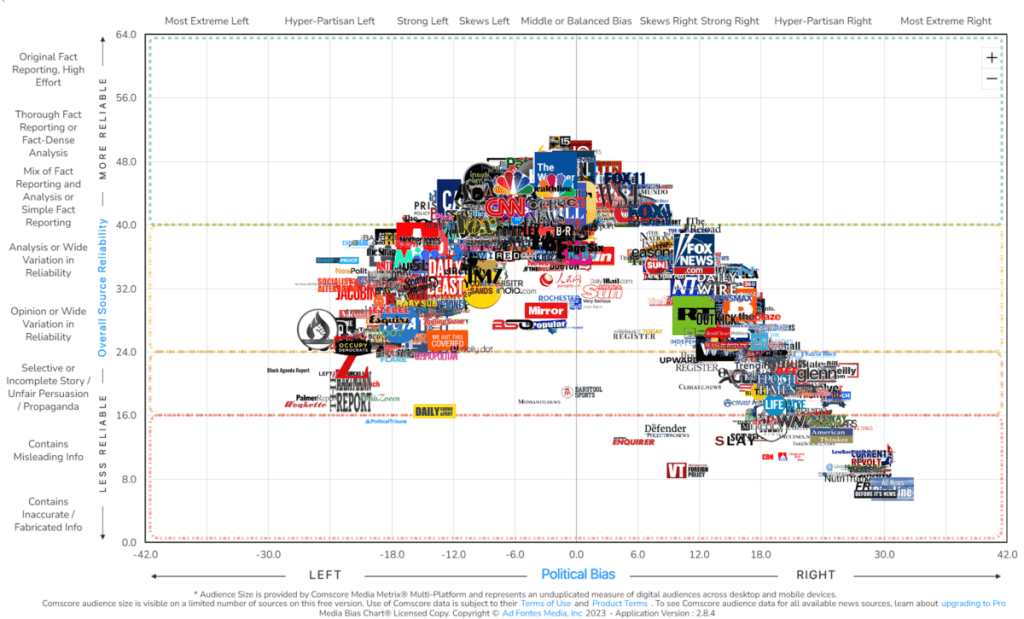
Major news networks like CNN, Fox News, and MSNBC dominate the USA media landscape, reaching millions of viewers daily and influencing our understanding of world events, while a single media outlet like Fox often stands out for its distinct perspective.
These media giants, alongside conservative news sources such as Newsmax and The Daily Wire, form a complex ecosystem that extends far beyond American borders.
For instance, CNN’s reach spans an impressive 347 million households across 212 countries.
However, despite their extensive influence, there’s a growing concern about how these major news networks and traditional media outlets deliver information to the public.


The media landscape is evolving rapidly, presenting unprecedented challenges for established news sources. While The Associated Press boasts a daily reach of 4 billion people and The New York Times proudly displays its 132 Pulitzer Prizes, public trust in news has shifted dramatically.
My years of tracking media trends suggest that understanding the struggles of mainstream media and identifying reliable alternatives will be crucial as we approach 202
. This changing dynamic raises important questions about the future of information dissemination and the role of diverse news sources in our increasingly connected world.
As we delve deeper into this topic, we’ll explore why major news networks often fall short of public expectations and uncover promising alternatives. These emerging options could help you construct a more balanced news diet, better serving your information needs in an era of information overload and polarized perspectives.
Join me as we navigate the complex world of modern media and discover strategies for staying well-informed in a rapidly changing news environment.
Why Major Media Outlets Are Getting It Wrong in 2026: Table of contents
- The Decline of Traditional Media Outlets
- Common Problems with Major News Outlets
- How Social Media Changed News Delivery
- Rising Alternative Media Sources
- Quality News Media Outlets Sources to Follow
- Tips for Finding Reliable News Media Outlets
- Promising Alternatives to Mainstream Media Examples
- How to Create Your Balanced Media Diet
- The Best News Networks to Watch in 2026: Media Outlets
- Conclusion: Top Media Outlets
- FAQs: Why Major Media Outlets Are Getting It Wrong in 2026
The Decline of Traditional Media Outlets
Recent Gallup polls reveal a troubling reality about American journalism – only 31% of Americans trust the media to report news “fully, accurately and fairly”. On top of that, more U.S. adults have zero trust in media (36%) than those who maintain some confidence.
Loss of public trust
Public confidence in media has hit rock bottom. Almost every democratic institution ranks higher than traditional media in public trust. The trust gap shows a stark political divide – just 11% of Republicans trust media outlets, while 58% of Democrats do.
Profit over quality reporting
The financial crisis in journalism tells a worrying tale. One in four newspapers has disappeared completely since 2005. Surviving outlets struggle with falling advertising revenue. So, newsroom staffing has crashed, and many local papers are shadows of what they once were.

The race for profits has changed how news gets covered. Journalists must meet strict metrics targets and often chase page views instead of delivering solid reporting. Some newsrooms just need specific quotas for page views and unique visitors, tracked through analytics software. This approach creates what industry insiders call “churnalism” – rushed content that lacks original research or substance.
Rush to publish without verification
Quick publishing deadlines create major fact-checking problems. A National Media Commission chairman puts it well: “If you are not certain, leave the story because it is better not to publish than go ahead and create problems“. All the same, many outlets rush stories before proper verification.
Three factors fuel this trend:
- Racing against social media’s instant news cycle
- Pressure to keep web traffic high
- Fewer newsroom resources to verify facts properly
What’s the result? Speed beats accuracy too often, especially when media outlets compete with unverified social media posts.
Read Also: 12 Best PR Agencies for Startups You Shouldn’t Miss In 2026
Common Problems with Major News Outlets
News organizations face problems that go beyond simple trust issues. A detailed analysis reveals several connected challenges that affect news quality and how the public views media.
Clickbait headlines
Online engagement has created a worrying trend in headline writing. News readers feel news outlets manipulate them with clickbait tactics. Many readers think these headlines mislead them. Research shows these headlines often lack complete information and rely too much on sensationalism.
Political bias in coverage
Media bias has reached worrying levels, especially in domestic politics and social issues. A study of 1.8 million news headlines shows growing polarization based on ideology. News outlets use different words to tell similar stories. To cite an instance, some say “abortion law” while others prefer “abortion rights”.
Misinformation
False information spreads faster than ever. About three-quarters of U.S. adults say they often see inaccurate election news. Research shows exposure to false information associates with lower trust in mainstream media across political parties.
Lack of diversity
Newsrooms struggle with diversity. New data shows:
- 76% of journalists are white
- Only 8% identify as Hispanic
- Just 6% are Black
- A mere 3% are Asian
Corporate ownership
Media ownership concentration creates another challenge. Six corporations control 90% of American media today. Just 232 executives decide what information reaches millions. This consolidation raises concerns about who controls narratives and content variety.
Polarization
Social media makes political divisions worse, though it didn’t start them. Studies show people who use more social media often have stronger political views and harsher attitudes toward opposing groups. Moral outrage drives online content powerfully, which creates deeper divisions in how people consume news.
How Social Media Changed News Delivery
Americans have changed how they get their news. 54% of U.S. adults now keep taking them from social media platforms. This fundamental change has created new ways people receive and consume information.
Speed vs accuracy
Quick news delivery creates new challenges for fact-checking. False information spreads up to 10 times faster than accurate news on social media. 20% of videos about major news stories on TikTok contain false information. Corrections rarely get as much attention as the original misleading content because viral engagement favors sensational over factual content.
Echo chambers
Users naturally form distinct information bubbles on social media. Twitter users split into opposing groups based on their political beliefs. Reddit and Gab users create single communities with strong ideological leanings – left and right respectively. These echo chambers magnify existing views and shield users from different points of view.
Algorithmic news selection
Algorithms shape what news users see. Facebook and YouTube are the leading news sources, with one-third of Americans getting news from each platform. TikTok’s influence grows fast. 52% of its users now depend on it for news, up from 22% in 2020.

The algorithmic selection shows interesting patterns:
- Democrats prefer Instagram, WhatsApp, and TikTok
- Truth Social (88%) and Rumble (83%) serve mostly Republicans
- Facebook and YouTube have an even political split
Algorithmic selection makes news more available but creates challenges to maintain balanced news consumption. Social feed technology prioritizes engagement over information quality. This changes how we find and consume news in the digital world.
Read Also: Unlock CoinDesk Coverage: The Ultimate Guide to Getting Your Story Published!
Rising Alternative Media Sources
News media is going through a major transformation as independent journalists create their own spaces. Last year saw 21,000 corporate media jobs vanish, which shows a dramatic 467% rise from 2022.
Independent journalism platforms
Independent journalism has become a strong alternative to traditional media outlets. These platforms work without corporate and government control in television, print, radio, and online formats. Many experienced journalists left their established media jobs to start their own outlets. YouTube, TikTok, Medium, Rumble, and Substack have turned into bustling hubs for independent voices.

Numbers prove independent platforms’ success. To name just one example, Substack has grown to over 20 million subscribers with more than 2 million paying subscriptions. The platform helps 17,000 writers earn their living.
Subscription-based news services
Subscription models are now the life-blood of sustainable journalism. The New York Times shows this change perfectly – it earned USD 2.30 billion in 2022, and subscriptions brought in 67% (USD 1.55 billion) of that money. This model delivers:

- Steady revenue streams
- Better privacy and security measures
- Better user experiences
- Quick access to updates and upgrades
Subscriptions keep growing stronger. 73% of digital leaders reported higher subscription numbers in 2023. Publishers now add new features like AI-powered audio changes, language translations, and customized content.
The future looks bright as subscription-based media outlets develop new products. 29% focus on games and 26% on education, while 42% plan to create content for young audiences. These new offerings will build more engaging content systems that meet specific audience needs.
Quality News Media Outlets Sources to Follow
Reliable news sources play a significant role in today’s changing media world. Three types of outlets stand out because of their dedication to accurate coverage and service to communities.
Fact-checking organizations
Fact-checking has become a vital service, with 170 certified organizations worldwide following the International Fact-Checking Network’s code of ethics. These organizations renew their certification yearly to maintain credibility. Major platforms like Facebook and Instagram use IFCN certification to evaluate publishers for fact-checking contracts.
Leading fact-checkers include:
- PolitiFact: Reduces deception in U.S. politics through nonpartisan analysis
- FactCheck.org: Serves as a nonprofit voter guide
- Snopes: Breaks down urban legends and viral claims since 1994
- Reuters Fact Check: Runs global fact-checking operations
Specialized industry news
Trade and industry-specific outlets deliver targeted coverage to specific audiences. These specialized sources uphold high editorial standards and give deeper explanations than general news coverage. ABI/INFORM Collection combines analysis from 2,000+ business publications, including respected sources like Harvard Business Review.
Specialized outlets cover a variety of areas including:
- Environment & Energy Daily’s environmental news
- Law360’s legal developments
- Foreign Policy magazine’s dedicated coverage of international relations
Local journalism initiatives
First and foremost, Local news strengthens democracy by helping communities understand local elections and reducing political polarization. Local outlets maintain high credibility despite challenges – 71% report news accurately, while 68% cover their community’s most important stories.

The American Journalism Project helps civic news organizations through venture philanthropy. More institutional foundations and tech companies like Google and Facebook step in to help local journalism. The Knight Foundation has pledged USD 300 million over five years to improve local news coverage.
These initiatives rebuild local news infrastructure that communities need for engagement and civic participation. This support ensures thorough coverage of significant topics over time.
Read Also: 10 Best Weber Shandwick Alternatives & Competitors You Should Check Out! – Expert List
Tips for Finding Reliable News Media Outlets
You need systematic evaluation techniques to find reliable information. Two basic approaches help you tell credible news from questionable content.
Cross-reference multiple sources
Fact-checking lives and dies by verifying information across multiple outlets. Comparing different versions of the same story shows consistency on its coverage and helps spot potential biases.
The SMART methodology gives you a well-laid-out way to evaluate news sources:
- Scope: Assess the depth and detail of coverage
- Authority: Verify author credentials and fact verification
- Relevancy: Determine if the content meets your needs
- Timely: Check if the information is current
Lateral reading helps identify potential astroturfing attempts by opening multiple browser tabs to cross-check information. You can get into hyperlinks, citations, and sponsored content to gain deeper insight into potential biases or hidden agendas.
Check source credentials
Source reliability depends heavily on author expertise and institutional affiliations. You gain insight into their authority on the subject by looking at an author’s specialization and current work in their field.
Look beyond surface-level information when checking source credentials. Credible sources typically show these traits:
- Consistent citation of reputable sources
- Clear author biographies and credentials
- Transparent organizational affiliations
- Regular content updates
Get a full picture by looking at both primary sources (original documents, eyewitness accounts) and secondary sources (analyzes, interpretations). The reputation and track record of publishing organizations help place information in context.
Note that peer-review and other verification systems help filter false information, but these processes aren’t perfect. You should keep a critical eye and regularly check with fact-checking organizations like FactCheck.org to add extra verification layers for controversial or significant news stories.
Promising Alternatives to Mainstream Media Examples
Alternative media platforms are revolutionizing the news world in 2026. These outlets provide fresh viewpoints to audiences who want different approaches to news coverage.
Rising Conservative News Sources: Media Outlets
Conservative news platforms have gained significant momentum. The Epoch Times positions itself as America’s fastest-growing independent news media. It retains a nonpartisan stance and emphasizes truthful coverage. The Daily Wire has established itself as a leading news publisher that openly embraces its conservative viewpoint.
Blaze Media demonstrates this success by reaching over 64 million people monthly through its media assets. Newsmax.com shows steady growth with increasing numbers almost every month during the last four years.
Conservative podcasting has become a powerful medium. Ben Shapiro commands more than 660,000 Castbox subscribers, while Megyn Kelly’s podcast continues to attract new listeners rapidly. These platforms prioritize:
- Freedom of speech and minimal censorship
- Alternative viewpoints to mainstream narratives
- Focus on traditional American values
- Independent ownership structures
Diverse Voices in USA Media Outlets
Multicultural media platforms serve as essential information channels. Audiences now seek content that reflects their experiences, and this demand reshapes media offerings.

Recent studies highlight important trends in diverse media consumption:
- More than half of Black consumers prefer content featuring people who reflect their communities
- About 70% of Black consumers, along with over half of Asian, multiracial, Hispanic, and Latino audiences, value diversity behind the scenes
- Over 40% of consumers find social media videos more diverse than traditional TV and film
Diverse consumers now represent more than one-third of the U.S. media and entertainment market. The Buckeye Flame has emerged to increase LGBTQ+ voices. Publications like Mother Jones deliver progressive viewpoints through news, commentary, and investigative journalism.
How to Create Your Balanced Media Diet
A balanced news diet needs careful selection and mindful consumption of information sources. We focused on developing a well-rounded understanding of current events. This approach helps you avoid relying on just one source.
Building a Diverse List of News Sources: Media Outlets
Your balanced media diet starts with picking different news sources. A well-rounded news consumption should include:
- Traditional broadcast networks for breaking news
- Independent journalism platforms for alternative points of view
- Local news outlets for community coverage
- International sources for global context
- Specialized industry publications for deep analysis
You might want to add fact-checking organizations to your regular reading list. Studies show that people who read multiple news sources have better information retention and critical thinking skills.
Critical Consumption Across Media Outlets
Active participation with content makes news consumption meaningful. Set aside specific time to read news rather than scroll passively. This well-laid-out approach helps you focus better and process information effectively.
You can develop critical consumption habits by questioning source motivations and looking for potential biases. Here are some practical strategies:
- Read beyond headlines to understand full context
- Get into author credentials and expertise
- Notice emotional triggers in content
- Track source funding and ownership
- Identify opinion versus factual reporting
A news diary can help track your media consumption patterns. This practice shows gaps in coverage and areas where you need more diverse viewpoints.
Smart time management means specific periods for different types of news. Breaking news works best in morning hours, while evening time suits in-depth analysis from long-form journalism sources. This approach prevents information overload but ensures detailed coverage of important topics.
Building a balanced media diet takes time and regular fine-tuning. News sources keep evolving and new platforms emerge. Stay flexible and ready to adjust your news consumption strategy as needed.
The Best News Networks to Watch in 2026: Media Outlets
News consumption patterns changed dramatically according to January 2026 data from major media outlets. The Los Angeles Times saw its web traffic double to 42.3 million visitors. Quality journalism has seen renewed growth after traditional outlets struggled with declining numbers.

Top-Rated Traditional Media Outlets
The New York Times leads all publications with 494.4 million visitors. CNN follows behind with 399.1 million monthly visits, and Fox News draws 278.4 million visitors. These numbers show how strongly audiences connect with trusted brands.
Major traditional media outlets continue to show their strength:
- BBC News reached 125.8 million visits (up 13.1%)
- USA Today hit 158.6 million visits (up 10.4%)
- CBS News drew 102.9 million visitors (up 39%)
Emerging Media Outlets Success Stories
Alternative platforms have shown remarkable growth. To cite an instance, Substack recorded 73.1 million visits with a 22.5% increase year-over-year. Axios showed impressive results with 31.4 million visitors, a 44% increase from previous months.
The Associated Press grew stronger with 116.2 million visits, showing 25% growth. This surge shows how much people want verified news sources. Niche platforms now stand toe-to-toe with mainstream outlets.
News influencers have become a growing force, with 23% now having formal journalism backgrounds. They build large followings through social media, podcasts, and newsletters. Their success shows how audiences want personalized news delivery.

Traffic patterns point to a clear shift toward specialized content. Athlon Sports saw its visits grow nearly four times larger. Successful media outlets now blend traditional journalism with new delivery methods.
Media outlets keep adapting to changing audience priorities. They learn about new formats – from podcasts to newsletters. These innovations become industry standards quickly. The data shows successful media outlets in 2026 balance their established credibility with modern content delivery.
Conclusion: Top Media Outlets
The way people consume media has transformed dramatically over the last several years. Major news networks like CNN and Fox still draw large audiences, yet conservative news sources like Newsmax now give news consumers compelling options to see different points of view, while other conservative news sources such as The Daily Wire attract viewers seeking alternatives to the narratives of major news networks. Even more niche conservative news sources, like The Epoch Times, have emerged as influential players in this shifting landscape shaped by both major news networks and their competitors.
Smart consumers need a balanced news diet. They now mix major news networks like MSNBC with independent journalism, specialized industry news, and local coverage to get the full picture, often turning to conservative news sources for perspectives they feel are underrepresented elsewhere. This all-encompassing approach, bolstered by conservative news sources that challenge conventional takes, helps them understand current events better while staying away from social media’s echo chambers. By incorporating conservative news sources into their media mix alongside major news networks, they ensure a broader, more diverse intake of ideas.

Fact-checking plays a crucial role in today’s digital world. Verifying information through multiple sources, including major news networks like CNN and conservative news sources like Newsmax, while evaluating content creators’ credentials, helps distinguish reliable news from questionable claims. News quality assessment becomes easier when you stay aware of potential biases from corporate ownership, algorithmic selection, or even the editorial slants of major news networks such as Fox News and conservative news sources like The Daily Wire.
The future of media consumption relies on choosing trustworthy, diverse sources while keeping a healthy dose of skepticism. Major news networks like MSNBC continue to play vital roles, yet alternative platforms, including conservative news sources like Breitbart, now bring valuable insights that mainstream coverage often missed. Smart consumers recognize these changes and adapt their news habits naturally.
FAQs: Why Major Media Outlets Are Getting It Wrong in 2026
Many major media outlets are owned by large corporations or billionaires who may have vested interests in how events are portrayed. Additionally, the pressure for ratings and clicks can lead to sensationalized or biased reporting rather than in-depth, objective coverage of complex issues.
Social media has accelerated the news cycle, prioritizing speed over accuracy. It has also created echo chambers where users are exposed primarily to information that aligns with their existing views. Algorithmic news selection on platforms further personalizes content, potentially limiting exposure to diverse perspectives.
Some alternatives include independent journalism platforms, subscription-based news services, fact-checking organizations, and specialized industry news outlets. Local journalism initiatives and international news sources can also provide valuable perspectives often missing from major U.S. media.
To create a balanced media diet, try cross-referencing multiple sources, including those with different political leanings. Check the credentials and reputation of news sources and authors. Seek out a mix of local, national, and international news, as well as long-form journalism and investigative reporting.
Media ownership can significantly influence news coverage. With a small number of corporations controlling a large portion of media outlets, there are concerns about narrative control and content diversity. This concentration of ownership can potentially lead to biased reporting or the suppression of certain stories that conflict with corporate interests.